Hevenu shalom alechem – Joshua Aaron – Lyrics

Hevenu shalom alechem – Joshua Aaron – Lyrics
Comments

Artist:

Joshua Aaron
Hevenu shalom alechem
Hevenu shalom shalom shalom alechem

Hevenu shalom alechem
Hevenu shalom shalom shalom alechem


We’re bringing Peace unto you

Hevenu shalom shalom shalom alechem
הבאנו שלום, שלום, (שלום עליכם)


We’re bringing Peace unto you

Hevenu shalom shalom shalom alechem
הבאנו שלום, שלום, (שלום עליכם)


Hevenu shalom alechem
Hevenu shalom shalom shalom alechem

Each week we have a song list for our weekly shabbat prayer and worship. If you can’t make it to our physical gathering you can still join in with worship. This song is in our rotation, click to here see our playlists on Spotify. 

Joshua Aaron is an award-winning American-Israeli independent singer and songwriter who was recently listed as one of the Jewish Global 100 influencers. He and his wife Jeannie raised their five children in Israel near the Sea of Galilee. Their eldest (Sargeant Emma) recently finished her IDF service, and their son, Shuki, currently serves in the IDF (Israel Defense Forces) in the Combat Corps of Engineering.


Related Articles

Hebrew Word Study “Tzavaot”

The Mystery in the Hebrew Word ‘Tzavaot’

Adonai-Tzva’ot is a name for God that translates to “Lord of Hosts” in English, and literally means “Lord of armies” in Hebrew. The word Tza-va (צבא) means “army”, and the plural Tza-va-ot (צבאות) means “multiple armies”. 

The name Adonai-Tzva’ot appears 235 times in the Bible, but it’s not often used and never appears in the Torah. It refers to God’s sovereignty and leadership.

The word Adonai is the plural of the Hebrew word Adon, which means “lord” or “master”. It was first used as a title for God before it became His name. The plural and capitalized form of Adonai is used because God is believed to be the “lord of all lords”. 

Adonai Tzva’ot, the “Lord of Hosts” is one of the names of God, used 235 times in the Bible. The first time it appears is in the story of Hannah and her husband Elkanah, in Hannah’s struggle with barrenness. Hannah is the first person to call God by this name. The literal meaning in Hebrew is “Lord of armies”:  Tza-va (צבא) is the word for army – and what today refers to the Israeli Defence Force. Tza-va-ot (צבאות) is the plural. Multiple armies. But is it necessarily a military word? What does it mean, when we call God “Lord of Armies”?

https://www.oneforisrael.org/bible-based-teaching-from-israel/what-does-lord-of-hosts-mean/

Noach

Noach

The Hydro-Powered Ark of Noah.

Envision a deluge over all the earth, mountainous waves pounding back and forth, crashing upon the Ark, drowning every living soul outside, until no dry land remains, and no life endures. Not only did Noah experience this long ago. This is also the world into which all living souls are thrown into. The waves represent stress and anxiety of indecision, not knowing which way to turn or upon whom to rely on. Up and down, hot and cold, constantly churning back and forth, trying to drown the life out of you. The secret one must know is that these are truly peaceful waters. It is a matter of perception. Why are they called “the waters of Noah”? Because their energy can be harnessed to achieve true serenity. Ruach Hydro Power. Do as Noah did and build yourself an ark. The word ‘ark’ in Hebrew is teivah, which also means “a word.” Your ark shall be the words of Torah and of prayer, accompanied with acts of kindness. When the waves rage—whether from outside or from within your own heart—direct their power into those harmonious words of Torah promises Rather than being drowned with everything else, let the mighty energy of the mountainous waters carry you upward—into a serene world you could never reach without them.

Blessings and Shalom aleichem

Ian Kuhlmann

PARDES – How to understand more than just the literal text

PARDES is an acronmy for (it’s also means “orchard”)

Peshat (פְּשָׁט) – “plain” and “straight”:  the direct, literal meaning of Scripture;

Remez (רֶמֶז) – “hints”: the deeper, symbolic meaning, going beyond the literal sense;

Derash (דְּרַשׁ) – from Hebrew root “darash” meaning “to inquire” and “to seek”: the comparative meaning, the meaning obtained from a passage by comparing it to similar passages in the Scripture;

Sod (סוֹד) – “secret”, “mystery”: the meaning of Scripture revealed through inspiration or revelation.

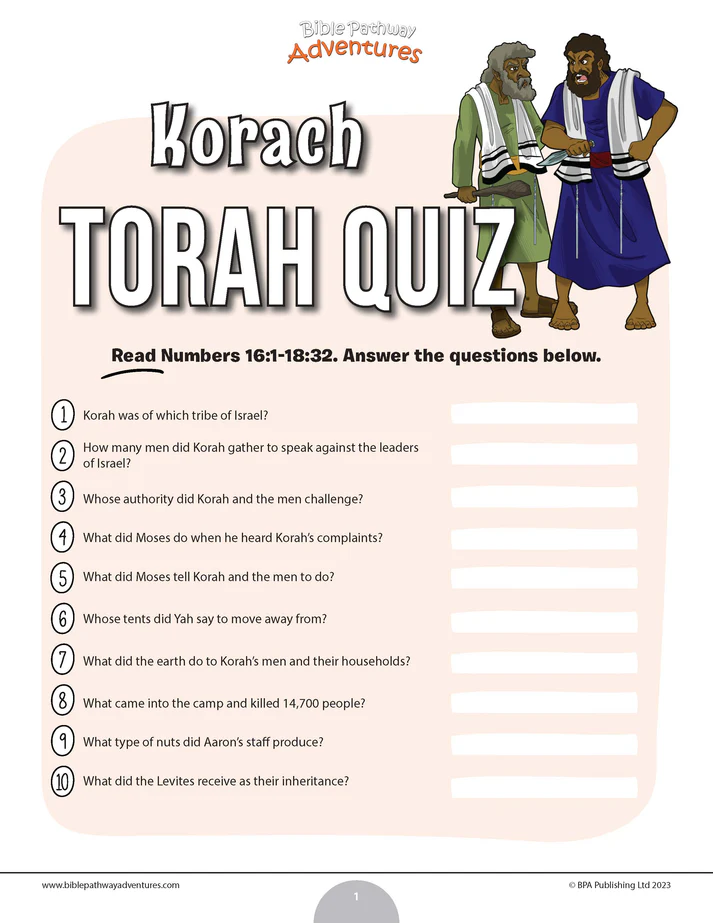
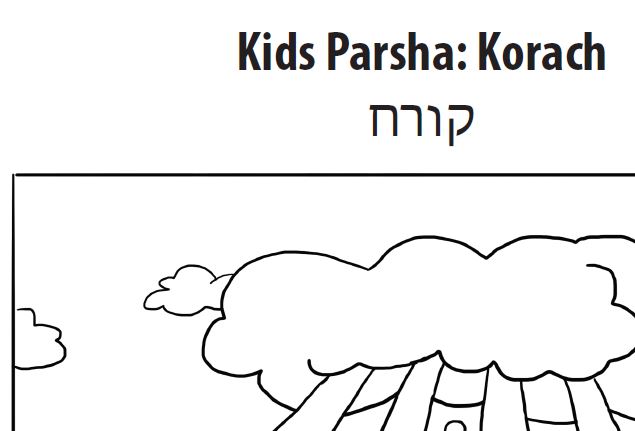
Torah portion for children Korach

Torah portion for children Korach

https://ffoz.org/kids